A glucose meter that is accurate enough is one with evidence that it meets ISO 15197:2013, the international accuracy standard for home blood glucose meters. That sounds like a box every meter ticks, and on paper most do. In practice, when researchers buy meters off the shelf and test them, some fall short.
That is the whole reason this page exists. In a US surveillance program, only six of 18 FDA cleared meters met the accuracy standard in every round of testing. In a European evaluation of 18 meters, four missed the minimum ISO accuracy limit. Every meter below has evidence you can open: a published study under ISO 15197:2013, or the maker’s own statement of compliance in its FDA filing, and for US models an FDA 510(k) clearance too. Then, and only then, it also had to be well rated by buyers on Amazon.
The short version
-
Best overall
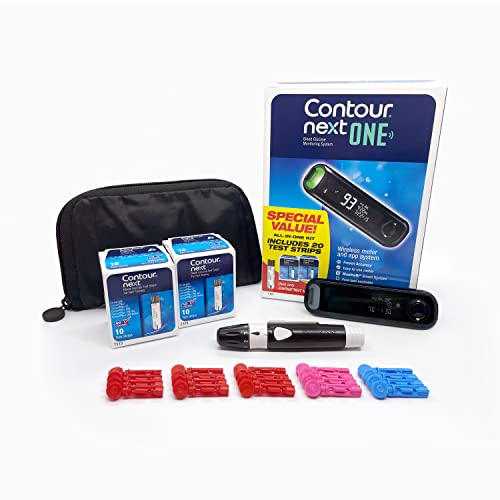
Ascensia CONTOUR NEXT ONE Blood Glucose Monitoring SystemThe tightest results in a 2020 study of 18 meters, with an app. Full review
$36.99 on Amazon Amazon Price as of Oct 31, 11:09 AM UTC -
Best simple meter
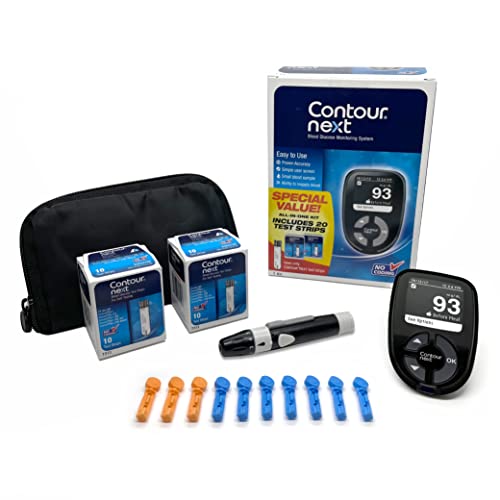
Ascensia CONTOUR NEXT Blood Glucose Monitoring SystemNo app needed, and it passed every round of the US surveillance program. Full review
$34.00 on Amazon Amazon Price as of Oct 31, 11:09 AM UTC -
Best with guidance
OneTouch Verio Reflect Blood Glucose MeterOneTouch Verio Reflect Blood Glucose MeterMeets ISO and FDA accuracy guidance, with pattern alerts on screen. Full review
$28.99 on Amazon Amazon Price as of Oct 31, 11:09 AM UTC Amazon UK -
Best compact meter
OneTouch Verio Flex Blood Glucose Monitoring SystemSmall, with a color range bar and an ISO 15197:2013 filing. Full review
-
Best for UK readers
Accu-Chek Guide Blood Glucose Meter (mmol/L)Every result inside the ISO limits in a study of 18 meters. Full review
-
Best simple UK meter
Accu-Chek Instant Blood Glucose Monitoring SystemMet the ISO limits over 18 months of routine use. Full review


Each pick shows only in the country where it passed both checks, so what you see depends on where you are reading from. The OneTouch Verio Reflect is the only one that passed in both the US and the UK.
What ISO 15197:2013 actually asks for
ISO 15197 was first published in 2003 and revised with tighter accuracy rules in 2013. In Europe the same rules are published as EN ISO 15197:2015, so when a UK or European document cites the 2015 edition, it means the same requirements. A 2020 evaluation published in BMJ Open Diabetes Research & Care sets out the minimum a meter must reach:
- At least 95% of readings within 15 mg/dL (0.83 mmol/L) of a laboratory reference when blood glucose is below 100 mg/dL (5.55 mmol/L), and within 15% at or above that level.
- At least 99% of readings in zones A and B of the consensus error grid, the zones where an error would make little or no difference to the care that follows.
- Both, on three different lots of test strips, so one good batch is not enough.
The standard also includes a test of the meter in the hands of ordinary users, not only trained staff. Several of the studies linked below report both.
One more thing worth knowing: the FDA does not use ISO 15197 to clear meters in the US. It publishes its own accuracy guidance for over-the-counter meters. So a US meter can be FDA cleared without anyone saying, in a document you can open, that it meets ISO 15197:2013. That is why US picks here need both.
How to check a meter yourself
Search the meter’s name with “ISO 15197” in PubMed or Google Scholar and look for a study of that exact model. For US meters, the FDA’s 510(k) database lets you search by the brand name; some summaries, like those for the OneTouch Verio Flex and Verio Reflect, state the ISO edition the meter was tested against. Then check that the model name on the store listing matches the one in the study. Meter makers reuse names: the CONTOUR NEXT, NEXT ONE, NEXT EZ and NEXT GEN are four different meters that share one strip.
What the surveillance studies found
The Diabetes Technology Society’s surveillance program bought 18 FDA cleared meters from ordinary stores, representing about 90% of the meters in use in the US from 2013 to 2015, and tested them on 1,035 people against a laboratory reference. The pass mark was a little more lenient than the regulatory standard. Even so, only six met it in all three rounds, and four did not meet it in any. The six were Contour Next, Accu-Chek Aviva Plus, Walmart ReliOn Confirm Micro, CVS Advanced, FreeStyle Lite and Accu-Chek SmartView. The authors concluded that cleared meters “do not always meet the level of analytical accuracy currently required for regulatory clearance.”
The 2020 European evaluation of 18 CE-marked meters reached a similar conclusion: 14 of the 18 met the minimum ISO accuracy limit, and even among those there was “considerable variation.” It was run by a German diabetes technology institute and co-funded by several meter makers, so we treat it as useful evidence rather than the final word.
Neither program has tested every meter on sale today, and both tested meters bought at one point in time. That is why each pick below links to more than one source where we could find one.
The picks
Ascensia CONTOUR NEXT ONE Blood Glucose Monitoring System
A meter that syncs each reading over Bluetooth to the free Contour Diabetes app. In a published study it exceeded the ISO 15197:2013 accuracy criteria in the laboratory and in the hands of people with diabetes testing themselves, and it was among the most accurate of 18 meters in a 2020 evaluation by a German diabetes technology institute. A colored light shows whether a reading is in, above or below the target range set on the meter.
- Model
- CONTOUR NEXT ONE (item 7824)
- Test strips
- CONTOUR NEXT
- Connectivity
- Bluetooth, Contour Diabetes app
- Second-chance sampling
- Up to 60 seconds to add more blood to the same strip
- Coding
- None needed
The proof: FDA 510(k) K160682 ISO 15197:2013 study (J Diabetes Sci Technol, 2017) EN ISO 15197:2015 evaluation of 18 meters (BMJ Open DRC, 2020)
Best for
Anyone who wants a log of their readings on their phone without writing them down.
Worth knowing
The target range light uses ranges stored in the meter. Set them with your diabetes team rather than guessing.
The CONTOUR NEXT ONE has the strongest evidence of any meter here. In its own ISO 15197:2013 study, nearly every reading taken by people with diabetes testing themselves met the criteria, and in the 2020 evaluation of 18 meters it kept 95% of its results within a narrower band than any other. It sends readings to the Contour Diabetes app over Bluetooth, and if a drop of blood is too small you have up to 60 seconds to add more to the same strip. It is sold on amazon.com only.
Ascensia CONTOUR NEXT Blood Glucose Monitoring System
The plain version of the CONTOUR NEXT: no app needed, the same CONTOUR NEXT strips. It was one of only six of 18 FDA cleared meters that met the accuracy standard in all three rounds of the Diabetes Technology Society surveillance program, and a 2024 study following ISO 15197:2013 found it accurate enough and recorded the fewest handling errors of the four meters tested.
- Model
- CONTOUR NEXT (item 7379)
- Test strips
- CONTOUR NEXT
- Coding
- None needed
- In the box
- Meter, 20 test strips, lancing device, 10 lancets, logbook, carrying case
The proof: FDA 510(k) K191286 Diabetes Technology Society surveillance study (Diabetes Care, 2018) ISO 15197:2013 study (J Diabetes Sci Technol, 2024)
Best for
A simple, well-proven meter for people who do not want an app.
Worth knowing
This listing is a kit with a small number of strips. Check what your insurance or pharmacy covers before you commit to a strip brand.
The CONTOUR NEXT is the meter that passed all three rounds of the US surveillance program, and a 2024 study following ISO 15197:2013 found it accurate enough, with the fewest handling errors of the four meters tested. It uses the same strips as the NEXT ONE, without the app. This listing is a kit with 20 strips, a lancing device and lancets.
OneTouch Verio Reflect Blood Glucose Meter
A meter with a color range indicator and short on-screen messages about patterns in your readings, with Bluetooth to the OneTouch Reveal app. Its FDA 510(k) summary states that it meets EN ISO 15197:2015, the European edition of ISO 15197:2013, and the accuracy guidance the FDA publishes for over-the-counter meters. A published study also reports it met that FDA guidance.
- Model
- OneTouch Verio Reflect
- Test strips
- OneTouch Verio
- Connectivity
- Bluetooth, OneTouch Reveal app
- In the box
- Meter, lancing device, 10 lancets, carrying case or pouch
The proof: FDA 510(k) K193475 (states EN ISO 15197:2015) Accuracy study (J Diabetes Sci Technol, 2020)
Best for
People who like a nudge from the meter when readings trend high or low.
Worth knowing
The on-screen messages are general pattern alerts, not treatment advice. Any change to your treatment is a decision for your diabetes team.
The Verio Reflect’s FDA 510(k) summary states that it meets both EN ISO 15197:2015 and the FDA’s guidance for over-the-counter meters, and a 2020 study reports it met that FDA guidance. A color indicator shows when a reading is approaching high or low, and short messages point out patterns over time. Those messages are general alerts, not treatment advice: any change to your treatment is a decision for your diabetes team.
OneTouch Verio Flex Blood Glucose Monitoring System
A small meter with a color bar that shows whether a reading is in, above or below your range, and Bluetooth to the OneTouch Reveal app. Its FDA 510(k) summary reports system accuracy and lay user testing under ISO 15197:2013 and states that it meets the standard. A 2020 evaluation of 18 meters by a German diabetes technology institute also found it within the ISO accuracy limits.
- Model
- OneTouch Verio Flex
- Test strips
- OneTouch Verio
- Connectivity
- Bluetooth, OneTouch Reveal app
The proof: FDA 510(k) K150214 (states ISO 15197:2013) EN ISO 15197:2015 evaluation of 18 meters (BMJ Open DRC, 2020)
Best for
A compact meter with an app and a color range bar.
Worth knowing
It shares OneTouch Verio strips with the Verio Reflect, not with the older OneTouch Ultra meters. Check the strip name before you buy refills.
The Verio Flex is a smaller, simpler cousin of the Reflect with the same strips. Its FDA 510(k) summary reports system accuracy and lay user testing under ISO 15197:2013, and it was within the ISO limits in the 2020 evaluation of 18 meters. It syncs to the OneTouch Reveal app.
Accu-Chek Guide Blood Glucose Meter (mmol/L)
A widely used meter from Roche. In a 2020 evaluation of 18 meters by a German diabetes technology institute it had every result within the ISO accuracy limits, and an 18-month follow-up study found it consistently met ISO 15197:2013. It reads in mmol/L, the unit used in the UK.
- Model
- Accu-Chek Guide
- Test strips
- Accu-Chek Guide
- Units
- mmol/L
The proof: EN ISO 15197:2015 evaluation of 18 meters (BMJ Open DRC, 2020) ISO 15197:2013 follow-up study (Diabetes Ther, 2024)
Best for
UK readers who want a meter with two accuracy studies behind it.
Worth knowing
The 2024 follow-up study was run with Roche, which makes the meter, and several of its authors work for Roche. The 2020 evaluation was co-funded by several meter makers, Roche among them.
In the 2020 evaluation, the Accu-Chek Guide had every one of its results within the ISO accuracy limits. A later 18-month study across five European centers found it, and three other Accu-Chek meters, consistently met ISO 15197:2013 in routine use. That study was run with Roche, which makes the meter.
Accu-Chek Instant Blood Glucose Monitoring System
A simple, newer meter from Roche. In an 18-month study at five European centers, with healthcare staff taking readings in routine use, it met the ISO 15197:2013 accuracy limits, and a separate 2024 study following ISO 15197:2013 found it accurate enough.
- Model
- Accu-Chek Instant
- Test strips
- Accu-Chek Instant
The proof: ISO 15197:2013 follow-up study (Diabetes Ther, 2024) ISO 15197:2013 study (J Diabetes Sci Technol, 2024)
Best for
A straightforward UK meter with a second, separate study behind it.
Worth knowing
The 18-month study was run with Roche, which makes the meter, and several of its authors work for Roche.
The Accu-Chek Instant was part of the same 18-month study, and a separate 2024 study following ISO 15197:2013 also found it accurate enough. It is a simple choice for UK readers, but check with your diabetes team first which strips they can prescribe (see below).
Strips are the real cost
A meter is a one-off purchase. Strips are not: you use one every time you test, and most meters take only one kind. The FDA lists the “cost of the meter and test strips” among the things to weigh when choosing, alongside accuracy, the amount of blood needed and how easy the meter is to use. It also says to “always use new test strips that are authorized for sale in the United States,” and has warned against previously owned strips.
In the UK, Diabetes UK says your doctor or nurse will give you a meter for free if you have type 1 diabetes or take medication that can cause hypos, and that your local area “will only prescribe strips for the meters they give out.” If you have type 2 diabetes, you may only get strips on prescription if your doctor or nurse wants you to self-monitor. Its advice is to speak with your healthcare team before buying your own meter, so you do not end up with a meter whose strips you have to buy forever. In the US, the same logic applies to insurance: check which strips your plan covers before you choose.
Getting a reading you can trust
Even an accurate meter gives a misleading number if the test is rushed or the strips have been stored badly. From the FDA and the American Diabetes Association:
- Talk to your doctor first about whether you should be checking at all, and how often. The ADA lists people taking insulin and people who are pregnant among those who may benefit.
- Wash and dry your hands before testing, and use the side of your fingertip (ADA).
- Read your meter’s manual. The ADA notes that “all meters are slightly different.”
- Store strips as the maker says, with the vial tightly closed (FDA).
- Run a control solution test when you open a new container of strips, if you drop the meter, or when a result does not match how you feel (FDA).
- Use your fingertip, not another site, when your glucose may be changing quickly, for example when you are ill, have just eaten or exercised, or think your blood sugar is low (FDA).
- Never share a meter (FDA).
- Take your meter to your next appointment, test in front of your clinician, and compare it with a laboratory test (FDA).
What your readings mean, and what to do about them, is for you and your diabetes team to decide. We do not interpret readings or give treatment advice.
What did not make the list
Several well-known meters are missing on purpose:
- CONTOUR NEXT EZ. FDA cleared and well rated, but the 510(k) summary we found was tested against the older 2003 edition of the standard, and we could not find a study of the EZ itself under ISO 15197:2013 to link.
- iHealth Gluco+ (BG5S). FDA cleared, but we found no ISO 15197:2013 evidence for it beyond the maker’s own spec sheet.
- FreeStyle Lite. It passed every round of the US surveillance program, but the amazon.com listings we found had too few buyer ratings to pass our bar.
- Accu-Chek Guide and Guide Me in the US, and the CONTOUR NEXT GEN. All have FDA clearances, but their amazon.com listings were currently unavailable or had too few ratings when we checked. The UK Accu-Chek Guide above is the mmol/L version.
- Cheap no-name meters. Many have no published accuracy study at all. No evidence, no listing.
The best meter is one with evidence behind it, whose strips you can get for as long as you need them, used the same careful way every time. Get those three right, and your readings will be worth taking to your diabetes team.