Baby shops sell whole aisles of health gadgets, and most of them are optional. The kit the American Academy of Pediatrics (AAP) and the NHS actually recommend keeping at home is short: a digital thermometer, an oral syringe for liquid medicine, saline nose drops with a way to suction a baby’s nose, and children’s fever and pain medicine. A cool-mist humidifier is a useful extra in cold season. That is it.
Every product below is either FDA cleared (the thermometer) or a type of item the AAP or the NHS recommends having at home, and we link the page that says so on every card. Then, and only then, it also had to be well rated by buyers on Amazon. We do not link medicines: buy those from a pharmacy, in the strength for your child’s age.
The short version
-
Thermometer
iHealth No-Touch Forehead Thermometer (PT3)iHealth No-Touch Forehead Thermometer (PT3)FDA cleared for all ages, no touch, and quiet enough for a sleeping child. Full review
$19.99 on Amazon Amazon Price as of Oct 31, 11:09 AM UTC Amazon UK -
Nasal aspirator
Frida Baby NoseFrida the SnotSucker Nasal AspiratorFrida Baby NoseFrida the SnotSucker Nasal AspiratorThe mouth-tube type with a filter that the AAP describes. Full review
$14.99 on Amazon Amazon Price as of Oct 31, 11:09 AM UTC Amazon UK -
Saline drops
Little Remedies Sterile Baby Saline Nasal Spray and Drops (1 fl oz)Non-medicated saline that works as drops or a gentle spray. Full review
$4.89 on Amazon Amazon Price as of Oct 31, 11:09 AM UTC -
Saline spray
Sterimar Breathe Easy Baby Nasal Spray (50ml)A gentle saltwater spray for babies, for a blocked nose. Full review
-
Oral syringe
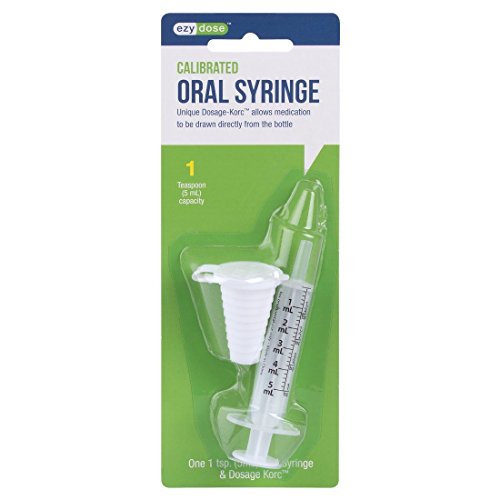
Ezy Dose Kids Oral Syringe and Medicine Dispenser (5 mL)Marked in milliliters, for measuring small doses accurately. Full review
$5.99 on Amazon Amazon Price as of Oct 31, 11:09 AM UTC -
Oral syringes
Medisure 5ml Oral Medicine Syringes with Bottle Plugs (pack of 5)A pack of 5ml oral syringes with bottle plugs. Full review


Each pick shows only in the country where it passed both checks, so what you see depends on where you are reading from. Where the same item is sold under different brands in the US and the UK, you will see the one for your store.
What belongs in the kit
These are the items the AAP and the NHS name, and what each one is for.
A digital thermometer
Both bodies say a digital thermometer, and both say never to use an old glass one with mercury. Which kind depends on age. For babies under 3 months, the AAP says a rectal reading “gives the best reading.” The NHS says to “always use the thermometer in the armpit with children under 5 years.” Either way you need a simple digital stick, and any pharmacy sells them. We have not yet found a stick on Amazon whose listing matches an FDA clearance exactly, so we do not link one. The AAP also says temporal artery (forehead) thermometers “can be used for all ages,” and ear thermometers from 6 months.
Our thermometer guide compares every type and lists the FDA cleared models with published accuracy. If you buy a stick for rectal use, the AAP says to label it so it is not used in the mouth.
An oral syringe
Liquid medicine for children is measured in milliliters, and small differences matter. The NHS says most children’s medicines come with an oral syringe, which “helps you measure small doses of medicine more accurately,” and says: “Never use a kitchen teaspoon to give your baby or child medicine, because they come in different sizes.” The AAP says to “always measure each dose using a tool (syringe, dosing cup, or measuring spoon) that is marked in milliliters.” A spare syringe or two means you are not stuck when one goes missing.
Saline drops and a nasal aspirator
Babies cannot blow their noses, and a blocked nose gets in the way of feeding and sleep. The AAP’s cold season kit starts with “nasal saline and a bulb syringe or aspirator”: saline to loosen the mucus, then gentle suction to remove it. It describes three kinds of aspirator: rubber bulb syringes, aspirators with a mouthpiece and tube (which “have filters to block the mucus from reaching your mouth”), and electric ones. The AAP notes that suction works best under 6 months, and that saline still helps once a baby starts fighting the bulb. The NHS says saline nose drops “can help loosen dried snot and relieve a stuffy nose,” and suggests asking a pharmacist, GP or health visitor about them.
Children’s fever and pain medicine
The NHS suggests keeping children’s paracetamol, ibuprofen or both at home, preferably sugar free, in the right strength for your child’s age. The NHS says paracetamol can be given from 2 months, and ibuprofen from 3 months if the child weighs more than 5kg. The AAP says ibuprofen is for children 6 months and older, and to call your pediatrician before giving any medicine to a child under 2, and right away if a baby under 3 months has a fever. Ask a pharmacist which product and dose suits your child.
A cool-mist humidifier (optional)
The AAP says a humidifier can help relieve a stuffy nose and dry cough, and that “cool-mist humidifiers generally are considered safer for young children than warm-mist humidifiers or steam vaporizers” because there is no risk of burns. Put it near your child but out of reach, and clean it as the manufacturer says, because a dirty one can spread mold and bacteria. We have not picked one yet.
What to leave out
The same bodies are just as clear about what does not belong in the cabinet:
- Over-the-counter cough and cold medicines for young children. The AAP says not under age 4; the NHS says children under 6 should not have them, including decongestants, unless a GP or pharmacist advises it.
- Aspirin. The NHS says not to give it to children under 16 unless a doctor prescribes it, because of its link to Reye’s syndrome; the AAP gives the same warning.
- Mercury thermometers and forehead strips. The NHS says strips are “not an accurate way of taking a temperature.”
- Kitchen spoons for measuring medicine.
- Honey for babies under 1, and mentholated chest rubs for children under 2. The AAP says honey can cause infant botulism, and that camphor in chest rubs can be toxic to babies.
The picks
iHealth No-Touch Forehead Thermometer (PT3)
A no-touch forehead thermometer that reads from about an inch away and shows the result in a second, with a vibration instead of a beep. The PT3 is named in its FDA 510(k) clearance for people of all ages, and the clearance summary reports a clinical accuracy study in babies, young children and adults.
- Model
- PT3
- Type
- Infrared, no touch, center of the forehead
- Ages
- All ages (FDA clearance)
- Reading
- About 1 second, vibration alert
- Power
- 2 AAA batteries, included
The proof: FDA 510(k) K200531 510(k) summary with clinical study
Best for
A quick check on a sleeping child, or a household that wants one thermometer for everyone.
Worth knowing
Forehead readings are affected by sweat, a cold forehead after being outside, or hair in the way. The AAP lists forehead thermometers as the next most accurate after rectal; for a baby under 3 months, it says a rectal reading is best.
For children who will not keep still for a stick, a forehead thermometer is the AAP’s next most accurate option after a rectal reading. The PT3 is FDA cleared for all ages and reads in a second without touching the skin, so it works on a sleeping child. It does not replace a stick for everyone: for a baby under 3 months, the AAP says a rectal reading is best, and the NHS prefers a digital thermometer under the armpit for children under 5 and says other types may not be as accurate. Keep a simple digital stick from the pharmacy as well.
Frida Baby NoseFrida the SnotSucker Nasal Aspirator
A manual nasal aspirator of the kind the AAP describes in its cold season kit: a tube with a mouthpiece, and a disposable filter that stops the mucus reaching your mouth. The tip seals against the outside of the nostril rather than going inside, and you control the suction yourself.
- Type
- Manual, mouth-tube aspirator with filter
- Ages
- From birth (maker)
- In the box
- Aspirator and 4 hygiene filters
- Cleaning
- Tube, mouthpiece and cap are top-rack dishwasher safe
The proof: AAP: Cough & Cold Survival Kit
Best for
Babies with a blocked nose who cannot blow it yet, used after a few drops of saline.
Worth knowing
Replace the filter after every use, and wash the parts as the instructions say. The AAP notes that suction works best in babies under 6 months, and older babies tend to fight it.
The NoseFrida is the mouth-tube aspirator the AAP describes: you hold the tip against your baby’s nostril and suck gently through the tube, and a disposable filter keeps the mucus out of your mouth. Use saline first to loosen things up.
Little Remedies Sterile Baby Saline Nasal Spray and Drops (1 fl oz)
A non-medicated saline solution for babies and children, in a small bottle that works as drops or as a gentle spray. Saline nose drops are the first thing both the AAP and the NHS suggest for a child's stuffy nose: they loosen dried or sticky mucus so it can be cleared.
- Type
- Sterile saline, non-medicated
- Use as
- Drops or spray
- Size
- 1 fl oz
- Free from
- Pseudoephedrine, alcohol, artificial colors (maker)
The proof: AAP: Cough & Cold Survival Kit AAP: How to Care for Your Child's Cold
Best for
Any household with a baby or toddler, ready for the first cold of the season.
Worth knowing
Saline loosens mucus; it does not treat the cold. For a baby, follow it with gentle suction. If your child is having trouble breathing, call your pediatrician rather than reaching for more drops.
Non-medicated saline is all the AAP and the NHS call for. Little Remedies is a sterile saline solution made for babies, in a small bottle that works as drops or a gentle spray. One to two drops or sprays in each nostril is what the AAP suggests.
Sterimar Breathe Easy Baby Nasal Spray (50ml)
A saltwater nasal spray for babies, made from isotonic sea water with no drugs, steroids or preservatives, and a nozzle shaped for small noses. The NHS says saline nose drops can help loosen dried snot and relieve a stuffy nose, and the AAP lists saline drops, sprays or mists in its cold season kit.
- Type
- Isotonic sea water spray, non-medicated
- Ages
- Birth to 3 years (maker)
- Size
- 50ml
- Free from
- Drugs, steroids, preservatives (maker)
The proof: NHS: colds in children AAP: Cough & Cold Survival Kit
Best for
UK parents who want saline ready before the first cold.
Worth knowing
The maker says it is for babies from birth to 3 years. The NHS suggests asking a pharmacist, GP or health visitor about saline drops if you are unsure, and using a spray on a wriggling baby takes practice.
For UK readers, Sterimar Baby is a saltwater spray made for babies’ noses, with a gentle nozzle. The NHS suggests asking a pharmacist, GP or health visitor about saline drops if you have not used them before.
Ezy Dose Kids Oral Syringe and Medicine Dispenser (5 mL)
A 5 mL oral syringe marked in milliliters, with a bottle adapter so you can draw the dose straight from the bottle. The AAP says to measure every dose of a child's liquid medicine with a tool marked in milliliters, and the NHS says an oral syringe measures small doses more accurately than a spoon.
- Capacity
- 5 mL
- Markings
- Milliliters
- Extras
- Bottle adapter
- Material
- BPA free (maker)
The proof: NHS: medicines for babies and children AAP: How to Care for Your Child's Cold
Best for
A spare dosing syringe for the medicine cabinet, for when the one in the box goes missing.
Worth knowing
Check that the marks on the syringe match the units on the medicine label. If the dose is given in a different unit, ask your pharmacist before you measure it.
Most children’s medicines come with their own syringe, so this is a spare. Choose one marked in milliliters, as the AAP advises, and match the marks to the dose on the label.
Medisure 5ml Oral Medicine Syringes with Bottle Plugs (pack of 5)
Five CE marked 5ml oral syringes, marked every 0.5ml, with bottle plugs that let you draw the dose straight from the bottle. The NHS says an oral syringe helps you measure small doses of medicine more accurately, and that a kitchen teaspoon should never be used.
- Capacity
- 5ml
- Markings
- Every 0.5ml, from 0.5ml to 5ml
- In the pack
- 5 syringes, 5 bottle plugs
- Marking
- CE0434, latex free (maker)
The proof: NHS: medicines for babies and children AAP: How to Care for Your Child's Cold
Best for
UK families who want spare syringes in the cabinet and the changing bag.
Worth knowing
Most children's medicines come with their own syringe, so use that one if you have it, and read the dose on the label each time. If in doubt, the NHS says to check with a pharmacist.
A pack of 5ml oral syringes with bottle plugs that let you draw the dose straight from the bottle. The NHS has a short video on how to give medicine with an oral syringe on its medicines page.
Keeping the kit safe
The NHS advice is short: keep medicines “out of your child’s reach and out of sight,” check expiry dates and take old medicines to a pharmacy, and never give your child medicine bought or prescribed for someone else. Keep a note of what you gave and when; the NHS suggests your child’s red book.
What did not make the list
- Electric nasal aspirators. The AAP lists them alongside bulb syringes and mouth-tube aspirators without preferring one, so we started with the simplest. We may add an electric one later.
- Vicks ComfortFlex and Braun BNT400 thermometers. Both are linked to FDA clearances, but neither Amazon listing carries the exact model number the clearance names. Our thermometer guide explains.
- Pacifier thermometers and fever strips. The AAP lists both as less accurate screening tools.
- Pacifier-style medicine dispensers. Both bodies talk about oral syringes and dosing tools marked in milliliters, so we have stuck with syringes.
- Medicated nose drops and decongestant sprays. The AAP and the NHS both point to plain saline for young children.
A thermometer, a syringe, saline and an aspirator, plus the right children’s medicines from the pharmacy, cover what the AAP and the NHS ask parents to have ready. If your child seems very unwell, trust that over any reading: call your pediatrician, your GP or NHS 111.